
lorida property owners face a roofing challenge that few other states can match. Between relentless UV exposure, torrential summer storms, and the constant threat of hurricane-force winds, commercial roofs in the region work harder than almost anywhere else in the country. Choosing the wrong system can mean premature failure, costly emergency repairs, or worse, catastrophic damage during a major storm event.
Let’s break down the commercial roofing materials best suited to Florida’s demanding climate and explain what makes each one perform under pressure.
Why Does Florida’s Climate Demand Specialized Roofing Materials?
Standard roofing products designed for milder climates simply do not hold up under Florida conditions. Between intense sun, heavy humidity, and the annual threat of tropical storms, materials that perform well elsewhere often degrade quickly here. Selecting the right system starts with understanding exactly how this environment affects a commercial roof over time:
- UV radiation breaks down membrane plasticizers, causing brittleness and premature cracking.
- Humidity and condensation promote mold, algae growth, and trapped moisture beneath poorly sealed seams.
- Salt air corrodes exposed fasteners, flashing, and metal panels faster than in inland or northern climates.
- Heavy seasonal rainfall exposes weak drainage design and undersized gutters or scuppers.
- Sustained hurricane-force winds test uplift resistance at seams, edges, and fastener patterns.
Because of these compounding stresses, Florida building codes in coastal and High-Velocity Hurricane Zones set wind resistance requirements far stricter than national standards. Choosing a material means understanding how it’s engineered, fastened, and installed to withstand this specific environment.
TPO Single-Ply Systems for Wind Resistance
Thermoplastic Olefin, or TPO, has become one of the most widely used membranes for flat and low-slope commercial roofs in Florida, and for good reason. Fully-adhered TPO systems distribute wind loads evenly across the roof surface, which helps the membrane resist uplift pressures generated by sustained hurricane-force winds. The reflective white surface also reduces heat absorption, which lowers cooling costs during Florida’s long, hot summers.
Beyond wind performance, TPO offers flexibility that allows it to move with a building’s structure without cracking or splitting: a critical trait during thermal cycling between scorching afternoons and cooler nights. Properly installed TPO systems also resist mold and algae growth, which is a common concern in Florida’s humid environment.
Single-Ply PVC and EPDM Options
Beyond TPO, other single-ply membranes such as PVC and EPDM offer viable solutions for specific commercial roofing applications, each bringing distinct strengths depending on the building’s use and exposure.
- PVC membranes resist chemicals and grease, making them a practical choice for restaurants and industrial facilities.
- EPDM, a synthetic rubber membrane, offers proven flexibility in applications with significant thermal movement.
Both options are lightweight, which reduces structural load on the building, and both install relatively quickly compared to multi-layer systems. The right choice between these materials often comes down to the building’s specific use, budget, and exposure conditions.
Modified Bitumen for Puncture and Debris Resistance
During a hurricane, wind-borne debris poses one of the greatest threats to a commercial roof. Modified bitumen systems address this danger through layered construction. Reinforced with fiberglass or polyester and built up in multiple plies, these assemblies create structural redundancy that helps stop flying debris from penetrating the roof surface.
This multi-layer approach also means that surface-level damage does not automatically compromise the entire system, since underlying layers continue to provide protection. Modified bitumen roofs handle Florida’s temperature swings well and tend to require less frequent recoating than lighter single-ply alternatives, making them a dependable option for buildings in storm-prone corridors.
Asphalt Built-Up Roofing (BUR) for Long-Term Durability
Built-up roofing, or BUR, remains a proven option for Florida commercial properties that prioritize longevity and fire resistance. Constructed from multiple layers of asphalt and reinforcing fabric, BUR systems create a thick, durable membrane capable of withstanding years of intense sun exposure and heavy foot traffic during maintenance.
While BUR installation can take longer than single-ply alternatives, the resulting system offers excellent resistance to punctures and weathering. For buildings with rooftop equipment or frequent maintenance access, this added durability often justifies the investment.
Shingle Roofing for Sloped Commercial Structures
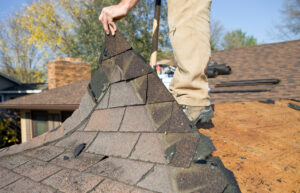
Not every commercial building has a flat or low-slope roof, and asphalt shingles remain a practical option for structures with pitched rooflines. Shingle roofing offers reliable weather protection at a lower material cost than most flat-roof systems, making it a sensible choice for commercial properties such as offices, retail buildings, or mixed-use structures built with traditional sloped construction.
Modern architectural shingles are rated for high wind resistance and hold up well against Florida’s combination of sun exposure and seasonal storms when installed with proper underlayment and fastening. They are also straightforward to repair and maintain, since damaged sections can typically be replaced without disturbing the surrounding roof area.
Metal Roofing Systems for Extreme Wind Loads
Metal roofing, particularly standing seam systems, has earned a strong reputation among Florida commercial property owners for one primary reason: its resistance to extreme wind. Concealed fastener designs eliminate exposed screw heads and gaskets, which are common failure points on older exposed-fastener panels. When properly designed and installed, standing seam systems can be engineered for exceptional wind uplift resistance.
Metal roofing also offers a long service life, often exceeding several decades with proper maintenance, and its reflective coatings help reduce energy costs. For commercial buildings seeking a lower-maintenance, high-performance option, metal roofing consistently ranks among the top choices for commercial roofing in Florida.
Metal roofing systems commonly used on Florida commercial buildings include:
- Standing seam panels for maximum wind resistance on high-exposure roofs
- Corrugated and ribbed metal panels for cost-effective large-span coverage
- Standing seam retrofit systems installed over existing low-slope roofs
- Metal panels in varying gauges and finishes to balance budget and performance needs
Why Roof Edges and Perimeter Details Matter
Many commercial roof failures during hurricanes don’t start in the field of the roof; they start at the edges. Perimeter metal, including edge flashing and coping, experiences the highest wind pressures on any commercial roof system. Once wind gets underneath an improperly secured edge, it can peel back the membrane across the entire roof in a matter of minutes.
Proper edge securement involves increased fastener density, correctly rated edge metal, and installation methods that meet current wind uplift testing standards. Building owners should never treat perimeter detailing as an afterthought. It is one of the most important factors separating a roof that survives a storm from one that does not.
Combating Coastal Corrosion and UV Degradation
Buildings located near Florida’s coastline face an additional layer of stress that inland properties do not: salt air. Ocean environments accelerate the oxidation of standard fasteners, flashing, and metal components, which can shorten a roof’s service life considerably if the wrong materials are used.
Coastal commercial roofing in Florida should always incorporate marine-grade or corrosion-resistant fasteners, along with UV-stable membranes designed to resist the sun’s damage over time. Heavy-duty flashing details around penetrations and edges further protect against water intrusion caused by corroded or degraded components. Materials and details that help coastal roofs resist accelerated wear include:
- Stainless steel or coated fasteners rated for marine environments
- UV-stabilized membrane formulations that resist cracking and chalking
- Reinforced flashing at all roof penetrations and transitions
- Regular inspection schedules to catch early signs of corrosion
Understanding NOA Requirements in High-Velocity Hurricane Zones
In Florida’s High-Velocity Hurricane Zones, mainly Miami-Dade and Broward, roofing materials need approval through Miami-Dade County’s Notice of Acceptance (NOA) process or Broward County’s Product Control approval. Both counties will also accept a valid Miami-Dade NOA or a Florida Product Approval as an alternative to their own county-specific review.
Meeting NOA requirements is not optional. Installations must follow exact fastening patterns, particularly at corners and edges where wind pressures are highest, in order to pass inspection and remain compliant. Working with a roofing team familiar with these codes helps ensure the finished project meets safety standards and local regulations from the start.
Balancing Energy Efficiency with Storm Performance
Material selection is not only about withstanding hurricanes. Florida’s year-round heat makes energy efficiency a major consideration as well. Reflective membranes, such as TPO and coated metal panels, reduce the amount of heat transferred into the building, which can meaningfully lower cooling costs over the life of the roof.
The best commercial roofing in Florida strikes a balance between these two priorities. A system chosen purely for storm resistance without considering thermal performance may leave money on the table each summer, while one chosen only for energy savings without adequate wind ratings could put the building at risk during hurricane season.
Get Reliable Commercial Roofing in Florida With American Roofing and Construction
Selecting the right roofing material is only part of the equation. Installation quality, fastening patterns, and attention to detail at edges and penetrations often determine whether a roof performs as expected during severe weather.
At American Roofing and Construction, we’ve spent years helping property owners across Orlando, Winter Haven, Tampa, Osceola County, and Cocoa Beach select and install roofing systems built for Florida’s conditions. As a locally owned and family-run company, our team brings hands-on experience with TPO, modified bitumen, standing seam metal, and other roofing systems, with a commitment to quality workmanship. Contact us to schedule a consultation and protect your commercial property with roofing built for Florida’s climate.